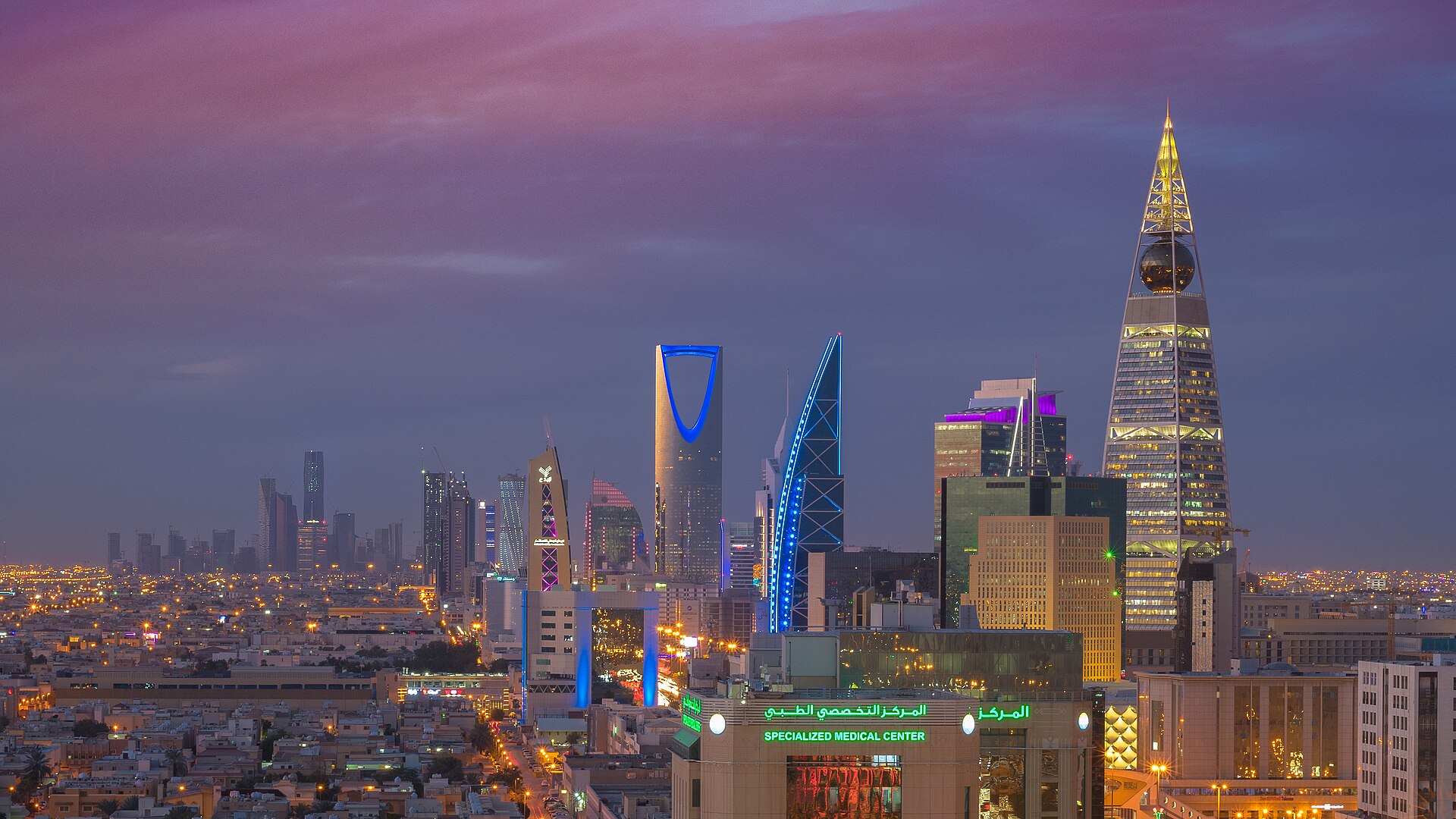
The region's largest economy has opened Tadawul to foreign investors over the past decade and produced the world's largest-ever IPO (Saudi Aramco), turning stock ownership into something close to a national pastime.
Feb 2026QFI programme abolished
OpenMain Market now direct to all foreign investors
10%cap per non-resident foreign investor
49%aggregate foreign ownership cap
Capital
Riyadh
Currency
Saudi riyal (pegged to the US dollar)
Main exchange
Saudi Exchange (Tadawul)
Regulator
Capital Market Authority (CMA)
How people invest in Saudi Arabia
IPO subscriptions draw enormous retail demand; real estate, sukuk (Islamic bonds), and gold remain culturally central; the sovereign Public Investment Fund (PIF) shapes the broader economy through its giga-projects.
Tadawul equities/IPOsReal estateSukukGold
Getting access
Residents and international investors face completely different mechanics here, so they are set out separately rather than blended into one set of instructions.
Living in Saudi Arabia
Opening an account as a resident
Saudi Arabia has the largest stock market in the region and a domestic retail base that participates heavily. There is no personal income tax on investment returns for individuals.
Open an account with a Capital Market Authority-licensed broker and obtain an investor number with the Securities Depository Center.
Trade Tadawul, the main market, in riyals. Nomu is the parallel market for smaller companies, with its own eligibility rules for investors.
There is no personal income tax and no capital gains tax on investment returns for individuals — zakat obligations for Saudi and GCC nationals are a separate matter from income taxation.
The riyal is pegged to the US dollar, which removes most currency risk from holding dollar assets.
The IPO market has been unusually active, and retail allocations in Saudi listings attract very large domestic participation.
Vision 2030 is not background context here — it is the driver of the listing pipeline, the privatisation programme and the sector composition of the market. Understanding what the state is trying to build tells you most of what you need about where the new supply of equity is coming from.
International
Investing in Saudi Arabia from outside
This changed fundamentally in 2026, and a great deal of published guidance is now out of date.
On 1 February 2026 the Capital Market Authority abolished the Qualified Foreign Investor programme entirely. Foreign investors, both institutional and individual, can now invest directly in Main Market shares without qualification thresholds or special regulatory status.
That removed the single largest barrier to entry. Anything written before 2026 describing QFI registration requirements no longer reflects how the market works.
Ownership limits remain: a 10% cap per individual non-resident foreign investor and a 49% aggregate cap across all foreign investors. The CMA has signalled an intention to review these further.
For most individuals a Saudi or Gulf ETF remains the simplest route, but direct access is now genuinely available in a way it was not before.
Saudi Arabia was added to MSCI's emerging market index in 2019, which brought the first large wave of institutional foreign money. The 2026 opening is the second structural step, and it is aimed at individuals as much as institutions.
What you can actually buy
Tadawul is the largest market in the region by some distance, and its composition reflects both the old economy and the diversification programme.
Tadawul-listed equities
Both
Dominated by petrochemicals, banks and the state energy company, with a growing set of consumer, healthcare and technology listings from the privatisation programme.
The local mechanic: No capital gains tax for individuals. Foreign ownership is capped at 10% per non-resident investor and 49% in aggregate.
Nomu parallel market
Residents
A market for smaller companies with lighter listing requirements and restrictions on who may invest.
The local mechanic: Investor eligibility rules are the gate here, and liquidity is materially thinner than the main market.
IPO allocations
Residents
Retail participation in Saudi listings has been extremely high, with heavy oversubscription common.
The local mechanic: Oversubscription means allocations are small relative to applications. Building a position through IPOs alone is slower than the enthusiasm suggests.
Sukuk and Islamic funds
Both
The domestic market is structured around sharia-compliant instruments as the default rather than the exception.
The local mechanic: Conventional bond and conventional banking exposure is comparatively limited, which changes what a "diversified" domestic portfolio actually contains.
The fund and ETF route
The domestic fund industry is growing alongside the privatisation programme, and offshore access has become easier.
Vehicle
Type
For
Notes
Domestic mutual funds
Open-ended
Residents
CMA-regulated and mostly sharia-compliant by default.
Tadawul-listed ETFs
Listed ETF
Both
A small listed fund market relative to the size of the underlying equity market.
Offshore Saudi ETFs
Listed ETF
International
Straightforward for foreign individuals, and now no longer the only practical route following the QFI abolition.
Saudi private capital is dominated by the sovereign wealth fund to a degree with few international parallels.
The Public Investment Fund is the central actor in the domestic economy, deploying capital across sectors as an instrument of the diversification strategy.
The venture ecosystem has grown quickly from a small base, supported substantially by state-backed funds of funds.
For individuals, access is largely through licensed intermediaries and funds rather than direct participation.
Saudi Arabia does not tax individual investment returns, and the relevant obligations for nationals sit elsewhere.
What
Rate
Applies to
Personal income tax
None
Individuals
Capital gains tax
None
Individuals on investment returns
Foreign ownership, per investor
10%
Non-resident foreign investors
Foreign ownership, aggregate
49%
All foreign investors combined
Zakat
Separate obligation
Saudi and GCC nationals; not an income tax
Zakat is a religious wealth obligation administered separately from income taxation and applies to Saudi and GCC nationals and entities. Non-resident investors should check their own home treatment and any treaty position. The CMA has indicated it may review foreign ownership limits further during 2026. This is general information rather than tax advice.
Risks worth pricing in
International
What international investors should weigh
Access improved dramatically in 2026. The underlying exposure did not change:
Oil sits underneath everything. Even the diversification programme is funded by hydrocarbon revenue. Petrochemicals and banks dominate the index directly, and government spending transmits the oil price into the consumer and construction sectors indirectly. Sector diversification within Saudi Arabia does not diversify away from oil.
Vision 2030 is a state programme with a timeline. The listing pipeline, privatisations and new sectors exist because of a policy agenda. That gives unusual visibility into future supply, and ties a large part of the investment case to execution by the state rather than by companies.
Ownership caps still bind. A 10% individual and 49% aggregate limit remain. In popular names, aggregate foreign room can be a real constraint even after the QFI abolition.
Valuation has reflected index inclusion flows. MSCI emerging-market inclusion in 2019 brought a large passive bid. Flow-driven repricing is not the same as a change in underlying earnings power.
Residents
What domestic investors should weigh
A tax-free environment with an active IPO market produces its own hazards:
IPO enthusiasm is not a strategy. Heavy oversubscription means small allocations, and listing-day performance has been uneven. Treating new issues as a reliable source of return has cost retail investors elsewhere in the region repeatedly.
Everything you own is exposed to the same cycle. Salary, government spending, property and the equity market all key off hydrocarbon revenue. International diversification matters more here than the tax-free domestic returns make it feel.
Nomu is not a smaller version of the main market. Lighter listing requirements and much thinner liquidity mean the risks are different in kind, not just in degree.
Sharia-compliant defaults shape your portfolio. When conventional bonds and conventional banking exposure are limited by construction, a domestic portfolio is less diversified across asset behaviour than the number of holdings implies.
How the market got here
Saudi Arabia formalised its market late and has opened it very quickly.
Yes, and this became far easier in 2026. On 1 February 2026 the Capital Market Authority abolished the Qualified Foreign Investor programme, allowing foreign institutional and individual investors to invest directly in Main Market shares without qualification thresholds or special status. Guidance written before 2026 describing QFI registration is out of date.
Are there still foreign ownership limits?
Yes. A 10% cap applies per individual non-resident foreign investor, and a 49% aggregate cap across all foreign investors. The CMA has indicated it intends to review these further, so the position may loosen again.
Do I pay tax on investments in Saudi Arabia?
There is no personal income tax and no capital gains tax on investment returns for individuals. Zakat is a separate religious wealth obligation applying to Saudi and GCC nationals and entities, administered independently of income taxation. Your own country of residence may still tax you.
What is Nomu?
The parallel market for smaller companies, with lighter listing requirements than the main Tadawul market and restrictions on who may invest. Liquidity is considerably thinner, so the risks differ in kind rather than just degree.
Is investing in Saudi Arabia a bet on oil?
Substantially, yes — including the parts that look like diversification. Petrochemicals and banks dominate the index directly, and the Vision 2030 programme building the non-oil sectors is itself funded by hydrocarbon revenue. Diversifying across Saudi sectors does not diversify away from the oil price.
Rates, thresholds and regulatory references on this page were last verified on . Saudi Arabia's rules are moving quickly — confirm anything you intend to act on against a primary source or a qualified adviser. Nothing here is investment, legal or tax advice.