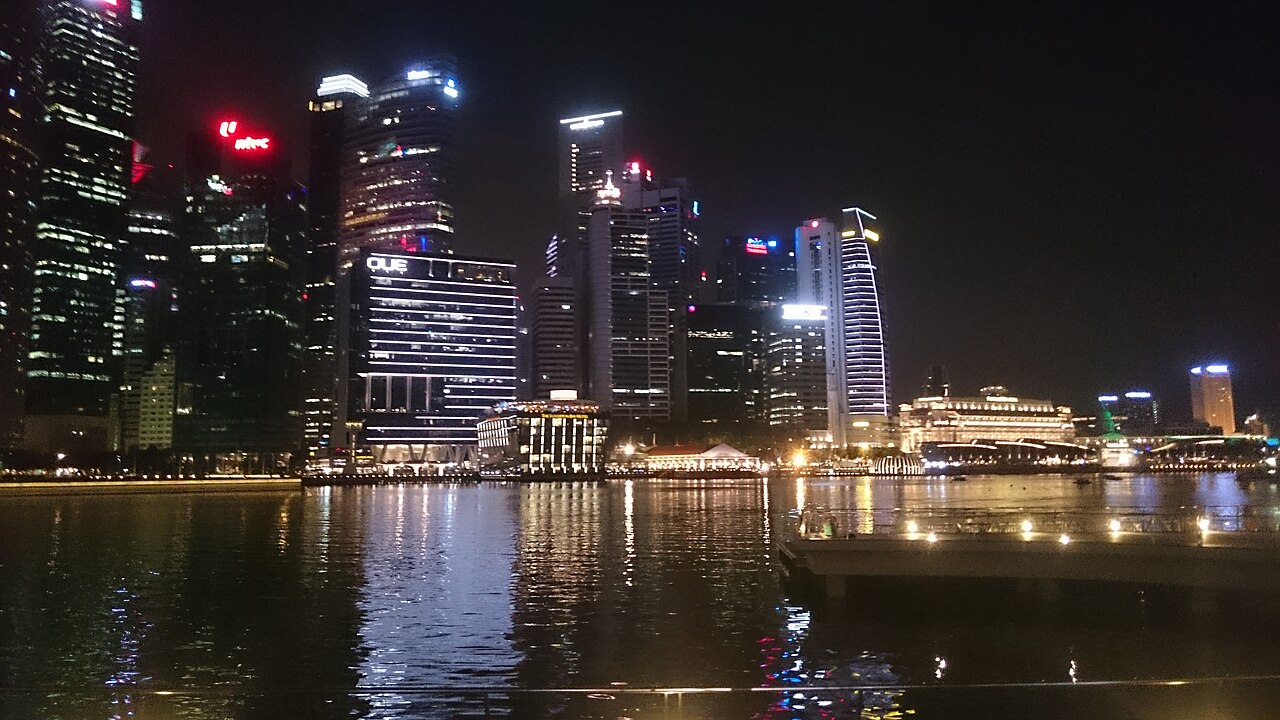
A global wealth-management hub with more single-family offices than almost anywhere in the world, drawn by tax incentives, political stability, and proximity to the rest of Asia's growth.
0%tax on capital gains
37%of wages into CPF, employee plus employer
S$8,000monthly CPF Ordinary Wage ceiling, 2026
5–60%ABSD range by buyer category
Capital
Singapore (city-state)
Currency
Singapore dollar
Main exchange
Singapore Exchange (SGX)
Regulator
Monetary Authority of Singapore (MAS)
How people invest in Singapore
The Central Provident Fund (CPF) anchors ordinary retirement saving; SGX is a global center for REITs, giving retail investors unusually direct access to real-estate income; private banking and family offices manage the rest of the region's wealthiest capital.
CPF savingsREITsPrivate bankingFamily offices
Getting access
Residents and international investors face completely different mechanics here, so they are set out separately rather than blended into one set of instructions.
Living in Singapore
Opening an account as a resident
Singapore is unusually easy to start investing from, and the reason is the same as Hong Kong's: there is no capital gains tax and no tax on most dividends, so the account is simply an account. What makes Singapore different is CPF — a compulsory savings system large enough that it shapes everything else.
Open a Central Depository (CDP) account, which holds SGX-listed shares directly in your own name. This is genuinely unusual — in most markets your broker holds shares for you in a nominee account, and in Singapore you can hold them yourself.
Choose between a CDP-linked broker and a custodian broker. CDP-linked means the shares sit in your CDP account; custodian accounts are cheaper to trade but the broker holds the shares. The difference matters if the broker fails, and most people never think about it until it does.
Fund in Singapore dollars. The MAS manages the currency against an undisclosed basket rather than targeting an interest rate, which is a genuinely different monetary framework from most of the region.
Consider the Supplementary Retirement Scheme for tax relief. Contributions are deductible up to S$15,300 for citizens and permanent residents, and S$35,700 for foreigners — a much larger allowance, and one of the few tax advantages the system gives foreigners over locals.
Understand what CPF already does. For employees aged 55 or below the employee contributes 20% and the employer 17%, on wages up to an Ordinary Wage ceiling of S$8,000 a month from January 2026. That is 37% of income already being saved before you invest a cent voluntarily.
Cash top-ups to your own CPF Special or Retirement Account attract tax relief of up to S$8,000, with another S$8,000 available for top-ups to eligible family members — so S$16,000 in total. Combined with SRS, the reliefs available to a Singapore resident are substantial and heavily under-claimed.
International
Investing in Singapore from outside
Singapore imposes no foreign ownership limits on listed equities and no capital controls. For international investors the practical question is usually not access but whether SGX is what they actually want.
Most international brokers reach SGX directly. There is no local trading code, no dedicated capital account and no mandatory custodian.
Be clear about what SGX is. It is a comparatively small equity market dominated by banks, REITs and industrials rather than the technology names that dominate regional indices — a very different market from the economy around it.
Singapore's REIT market is the genuine specialism, and the reason many foreign investors come here at all. It is deep by regional standards and holds assets across Asia rather than only domestically.
For fund exposure, Singapore is one of Asia's two dominant fund-domicile and private-banking centres alongside Hong Kong, and the competition between them is real.
A foreigner cannot join CPF, but can contribute to SRS at the higher S$35,700 limit while tax-resident here. That asymmetry is deliberate and is worth understanding before assuming the local schemes are closed to you.
What you can actually buy
Singapore's menu is shaped by two things: the absence of capital gains tax, and the presence of a compulsory savings system that has already claimed a large share of income before any decision is made.
SGX equities and REITs
Both
The domestic market is concentrated in banks, REITs and industrials. Singapore REITs are the segment with genuine international standing — a deep, liquid listed property market holding assets across Asia, not just locally.
The local mechanic: Shares can be held in your own name through CDP rather than in a broker nominee account. Few markets offer that, and it removes a layer of counterparty risk most investors never price.
CPF and the CPF Investment Scheme
Residents
CPF takes 37% of wages up to the ceiling for those aged 55 and under. Balances earn government-set floor rates, and the CPF Investment Scheme lets you invest part of the Ordinary Account beyond that.
The local mechanic: The floor rate on CPF is the hurdle any CPFIS investment must beat, and a great many do not. Investing your CPF is only rational if you genuinely expect to exceed a guaranteed rate — for most people leaving it alone has been the better decision.
Supplementary Retirement Scheme
Both
Voluntary, tax-deductible, and invested at your discretion. S$15,300 a year for citizens and PRs, S$35,700 for foreigners.
The local mechanic: Uninvested SRS cash earns a token interest rate, so the relief is only half the benefit — the money has to actually be deployed. A large share of SRS balances sit in cash, which quietly wastes the scheme.
Residential property
Both
Buyer's stamp duty runs to 6% on residential property, and Additional Buyer's Stamp Duty ranges from 5% to 60% depending on buyer category and how many properties you already own.
The local mechanic: ABSD is the policy lever, and it is aimed squarely at foreign and multiple-property buyers. At the top of that range it is not a friction — it is a prohibition with a price tag, and it makes Singapore property a fundamentally different proposition for a foreigner than for a citizen.
The fund and ETF route
Singapore's fund industry is regional infrastructure. For an individual the practical choice is between local products and the global menu that is equally reachable from here.
Vehicle
Type
For
Notes
SGX-listed ETFs
Listed ETF
Both
Includes CPF-eligible options, which matters if you are investing CPF rather than cash.
Ireland-domiciled UCITS
Listed ETF
Both
The common choice for globally diversified exposure, largely because the US withholding tax position is better than holding US-domiciled funds directly.
US-domiciled ETFs
Listed ETF
Both
Deep and cheap, but a non-US holder typically loses 30% of dividends to US withholding and faces US estate tax exposure above a low threshold — a risk many Singapore-based investors never check.
Singapore REITs
Listed trust
Both
The domestic specialism. Distributions to individuals are generally not taxed in Singapore.
Singapore is the region's dominant hub for fund formation, family offices and venture capital — more so than anywhere else in Southeast Asia.
The Variable Capital Company structure, introduced to compete directly with offshore fund domiciles, made Singapore a genuine onshore alternative for fund managers.
Family office incentive schemes have drawn substantial regional wealth, and the qualifying conditions have been tightened repeatedly as the volume grew.
For an individual, private-market access runs through accredited-investor status and licensed intermediaries. The accredited threshold is the gate, and it is worth knowing that clearing it removes regulatory protections as well as restrictions.
Singapore's tax treatment of investment is close to the simplest in Asia, and the complexity that does exist sits in property and in what other countries do to you.
What
Rate
Applies to
Capital gains tax
None
No tax on investment gains for individuals
Dividend tax
None
Singapore-sourced dividends under the one-tier system
Buyer's stamp duty
Up to 6%
Residential property; up to 5% non-residential
Additional Buyer's Stamp Duty
5%–60%
By buyer category and number of properties held
SRS relief
S$15,300 / S$35,700
Citizens and PRs / foreigners, per year
CPF cash top-up relief
Up to S$16,000
S$8,000 own account plus S$8,000 for family
The absence of capital gains tax applies to investment, not to trading as a trade — someone whose activity looks like a business can be assessed differently, and the line is drawn on facts rather than a bright-line test. This is general information rather than tax advice, and your country of citizenship may tax you regardless of Singapore's treatment. US citizens in particular remain within the US tax net wherever they live.
Risks worth pricing in
International
What international investors should weigh
Singapore's reputation for stability is earned, and it is also what makes investors skip the questions that matter here:
The market is not the economy. SGX is concentrated in banks, REITs and industrials. An investor buying Singapore for exposure to Southeast Asian growth or regional technology is buying the wrong instrument — the listed market simply does not represent that.
Small market, real liquidity limits. Outside the largest names, liquidity thins quickly. Position sizing that works in a deep market can trap you here.
Property is gated by policy, not price. ABSD reaching 60% for some buyer categories is not a tax to be modelled around — it is a deliberate exclusion. Foreign buyers should treat Singapore residential property as effectively closed unless the numbers still work after it.
Rates are not the policy lever. The MAS manages the exchange rate against a basket rather than setting an interest rate target. Anyone reading Singapore through a conventional central-bank lens will misread what the policy signal actually is.
Residents
What domestic investors should weigh
For residents the tax position is excellent and permanent. The risks are about concentration and about schemes people join by default:
CPF is already a large fixed-income position. With 37% of wages flowing in at a government-set rate, most residents hold far more low-volatility assets than they realise. Building a cautious portfolio on top of that is doubling down, not diversifying.
Property plus CPF plus salary is one bet. Housing typically absorbs CPF, leverage and monthly surplus at once. When your job, your home and your savings scheme all key off the same small economy, holding assets outside Singapore is the diversification that actually counts.
SRS relief is wasted if the cash sits idle. The deduction is immediate; the return is not. Uninvested SRS balances earn a token rate, and a large share of them stay that way for years.
US-domiciled funds carry estate-tax exposure. Non-US investors holding US-domiciled ETFs can face US estate tax above a threshold far lower than most assume. It is one of the most common and least-discussed mistakes among Singapore-based investors, and it is avoidable by choosing domicile deliberately.
How the market got here
Singapore's financial system was built deliberately and in a compressed period, which is why so much of it is scheme-based rather than organic.
1955The Central Provident Fund is established as a compulsory savings scheme.
1971The Monetary Authority of Singapore is founded.
1973Singapore and Malaysia separate their stock exchanges.
1999SGX is formed from the merger of the stock and derivatives exchanges.
2002The first Singapore REITs list, beginning the market that became the country's financial specialism.
2003The Supplementary Retirement Scheme opens.
2020The Variable Capital Company structure launches, competing directly with offshore fund domiciles.
2023ABSD rates are raised sharply, with the top foreign-buyer rate reaching 60%.
Jan 2026The CPF Ordinary Wage ceiling reaches S$8,000 a month, completing a phased series of increases.
Trends shaping Singapore
Regional investing patterns that show up strongly in Singapore — read the full analysis in investing trends.
No. Singapore levies no capital gains tax on individuals, and dividends from Singapore companies are not taxed in your hands under the one-tier system. The exception is activity that amounts to trading as a business rather than investing, which is assessed on the facts. Your country of citizenship may tax you regardless — US citizens especially.
What is CDP and why does it matter?
The Central Depository holds SGX-listed shares directly in your own name rather than in a broker's nominee account. Most markets do not offer this. It costs slightly more to trade through a CDP-linked broker, and in exchange you remove a layer of counterparty risk — a trade-off most investors never consciously make.
How much of my salary goes into CPF?
For employees aged 55 or below, 20% from you and 17% from your employer, on wages up to an Ordinary Wage ceiling of S$8,000 a month as of January 2026. That is 37% of capped income saved before any voluntary investing. Rates step down at older age bands.
Is SRS worth it?
The relief is real — up to S$15,300 a year for citizens and PRs and S$35,700 for foreigners, deducted from your assessable income. The catch is that uninvested SRS cash earns a token rate, so the scheme only works if you actually deploy the money. Withdrawals before the statutory retirement age carry a penalty, so it suits money you were committing long term anyway.
Can a foreigner buy property in Singapore?
Yes, but Additional Buyer's Stamp Duty runs from 5% to 60% depending on buyer category and how many properties you hold, on top of buyer's stamp duty of up to 6%. At the upper end this is a deliberate exclusion rather than a cost to optimise around. Landed residential property has separate approval requirements.
Should I buy US-domiciled or Ireland-domiciled ETFs?
For most non-US investors based in Singapore, Ireland-domiciled UCITS funds are the better structure: US-domiciled funds typically suffer 30% withholding on dividends for non-treaty holders and can expose you to US estate tax above a low threshold. US-domiciled funds are cheaper and deeper, so the answer depends on your situation — but it deserves an actual decision rather than a default.
What is Singapore's stock market actually made of?
Banks, REITs and industrials, mostly. It is a comparatively small market that does not represent the regional technology growth story many investors assume they are buying. The REIT segment is the genuine international specialism — deep, liquid, and holding assets across Asia rather than only in Singapore.
Rates, thresholds and regulatory references on this page were last verified on . Singapore's rules are moving quickly — confirm anything you intend to act on against a primary source or a qualified adviser. Nothing here is investment, legal or tax advice.